Two collectors can move the same air volume and still behave completely differently. The difference is usually filter area: the square metres of media the air has to pass through. Double the area and the air moves through the pleats at half the speed — and the pressure drop the fan has to fight falls with it.
Face velocity is the number to watch
Face velocity is air volume divided by filter area. A cartridge pack running at 0.8 m/min is comfortable; the same pack at 1.5 m/min is working twice as hard for the same airflow. Higher face velocity means:
- Higher differential pressure — the fan uses more energy to move the same air.
- Dust driven deeper into the media — pulse cleaning cannot reach it, so the pressure creeps up instead of recovering after each cleaning cycle.
- Shorter service life — the element is replaced on pressure, not on hours.
The arithmetic is simple
A collector moving 5 000 m³/h with 6 m² of media runs at about 13.9 m/min face velocity — far too high for a pleated element. The same collector with a longer cartridge pack providing 10 m² runs at 8.3 m/min. Nothing else changed: same fan, same duct, same dust. Only the media area moved.
When to specify the longer element
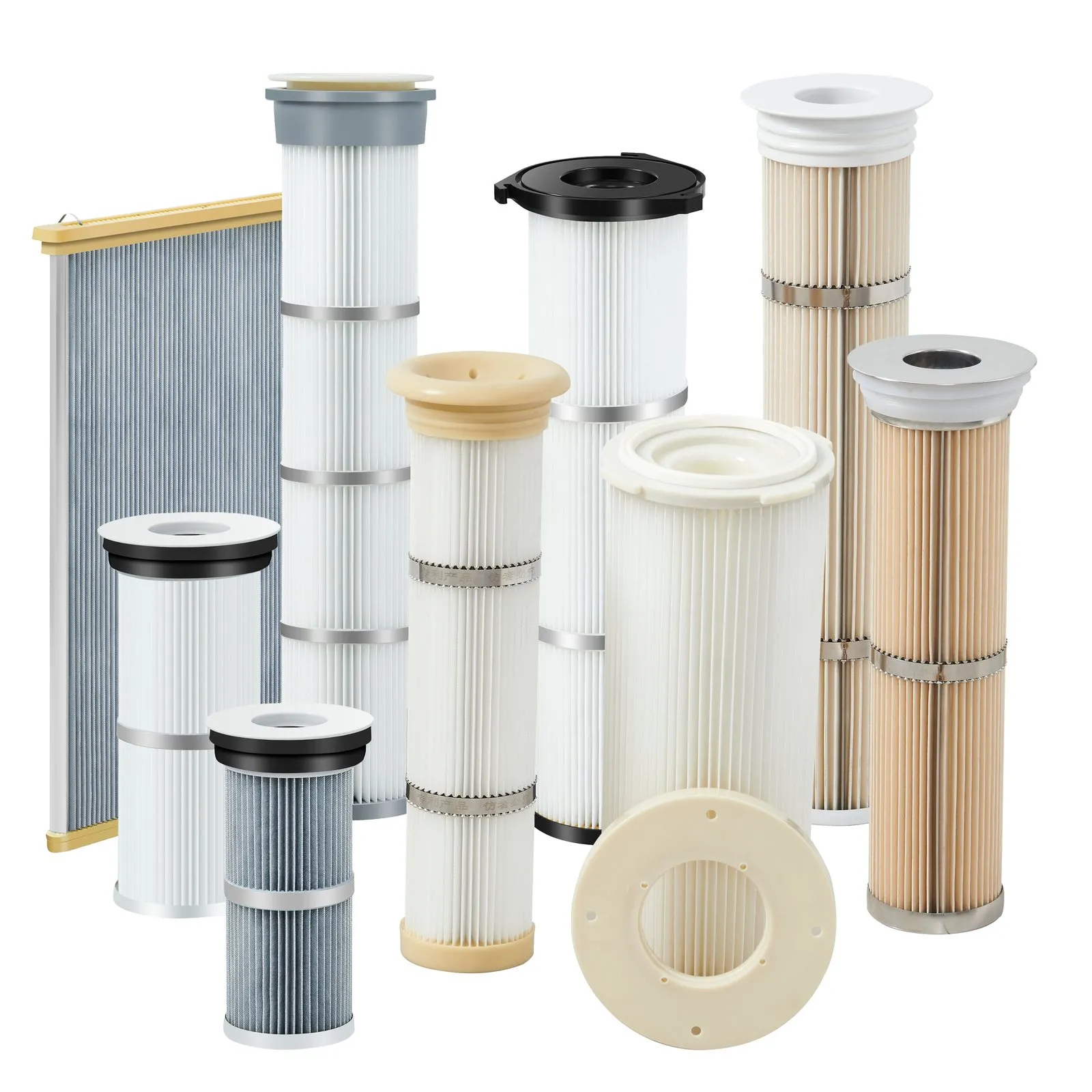
- The housing has room. A taller cartridge often fits the tube sheet you already have; longer lengths are what the KNT-LT series exists for.
- The fan is already at its limit. Adding area lowers pressure and can bring a marginal system back into range without replacing the fan.
- The dust is fine and sticky. Fine dust loads the surface quickly; extra area buys the pulse-jet time to keep up.
If the housing is short and the dust is coarse, a cyclone pre-separator is usually the better first move — see when to pre-separate with a cyclone. Sizing both together is what we do before quoting; send us the airflow, the dust and the housing and we will run the numbers.