Cartridge filters are good at capturing fine dust. They are expensive when they are asked to swallow wood chips, cement grit and blasting media at the same time. A cyclone pre-separator removes the coarse fraction before it reaches the media — sometimes the single most effective change you can make to a struggling system.
When a cyclone earns its place
- The dust is bulky. Sawmills, MDF lines, planing and routing produce chips alongside fine dust. Volume, not weight, fills the bin and blinds the pleats.
- The load is continuous. A machine running all shift produces more dust in a day than a cartridge can shed by pulse cleaning.
- The material is abrasive or hot. Coarse particles hitting the media at speed wear the pleats; dropping them out first removes both the wear and most of the spark risk.
When it does not
If the dust is fine, light and produced intermittently — welding fume, laser cutting fume, polishing dust — a cyclone has little to separate and simply adds pressure drop and floor space. The same applies where the collected dust has value: every kilo in the cyclone bin is a kilo you may struggle to recover from a mixed stream.
The practical middle ground
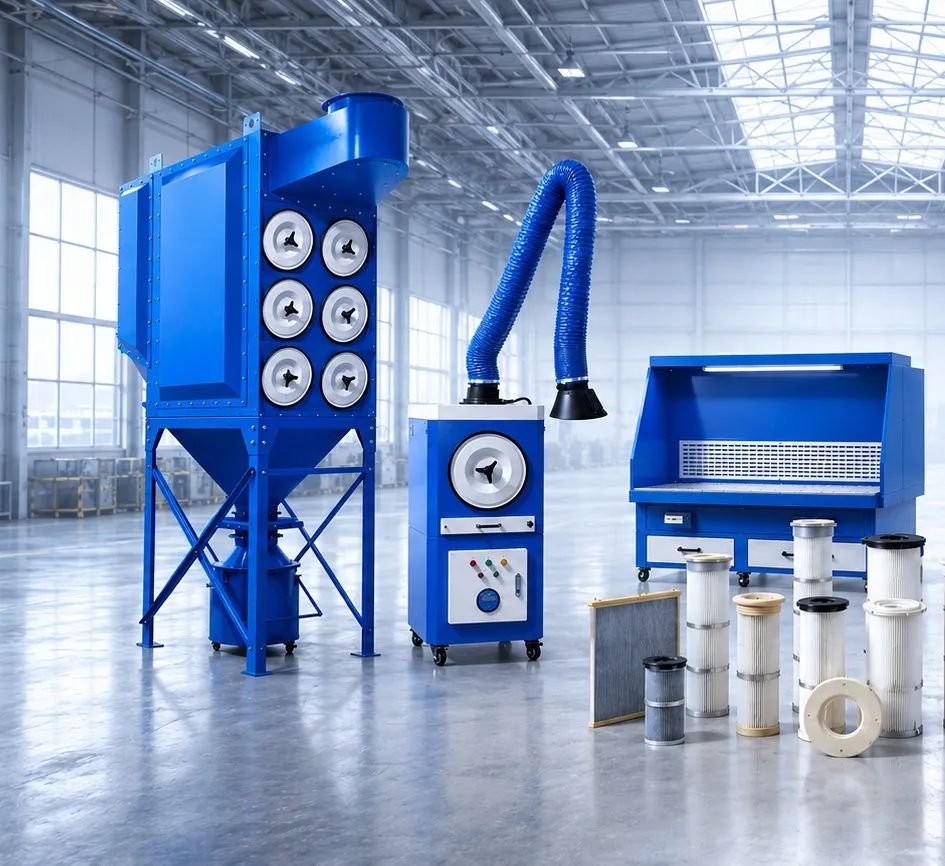
For mixed streams we supply a cyclone and a cartridge after-filter on one base frame. The cyclone drops the coarse fraction, the cartridge stage handles the fine dust, and the filter sees only the load it was designed for. On a woodworking line this typically changes cartridge replacement from a monthly job to a twice-yearly one.