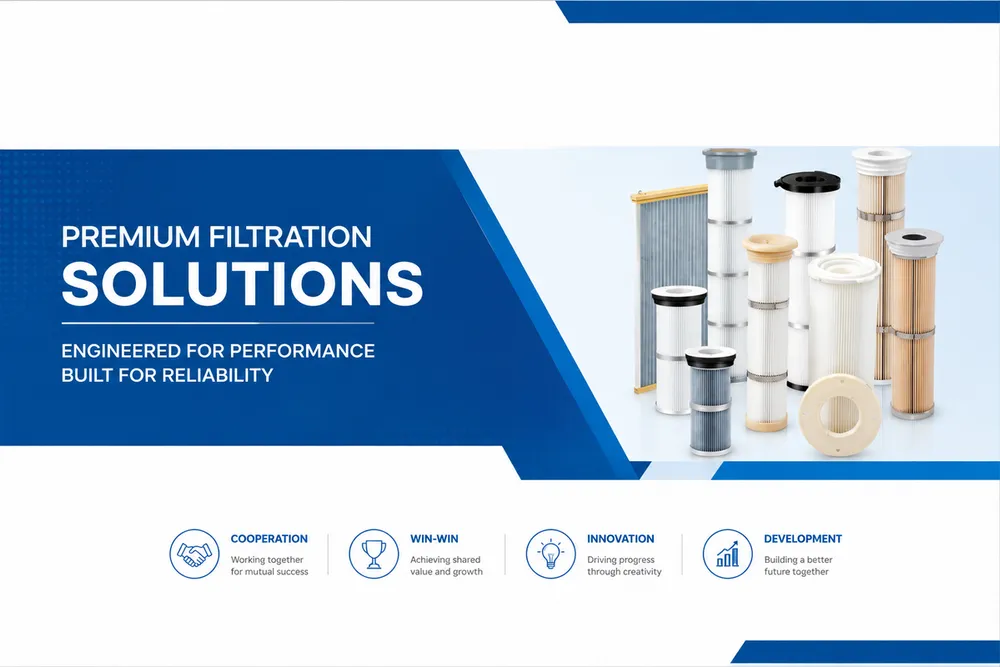
Sparks are not smoke. They are solid particles that are still burning when they leave the process, and a duct is very good at keeping them burning all the way to the filter. A cartridge is made of pleated media with a large surface area and a layer of collected dust on it — exactly the conditions a spark needs to start something.
What a spark catcher does
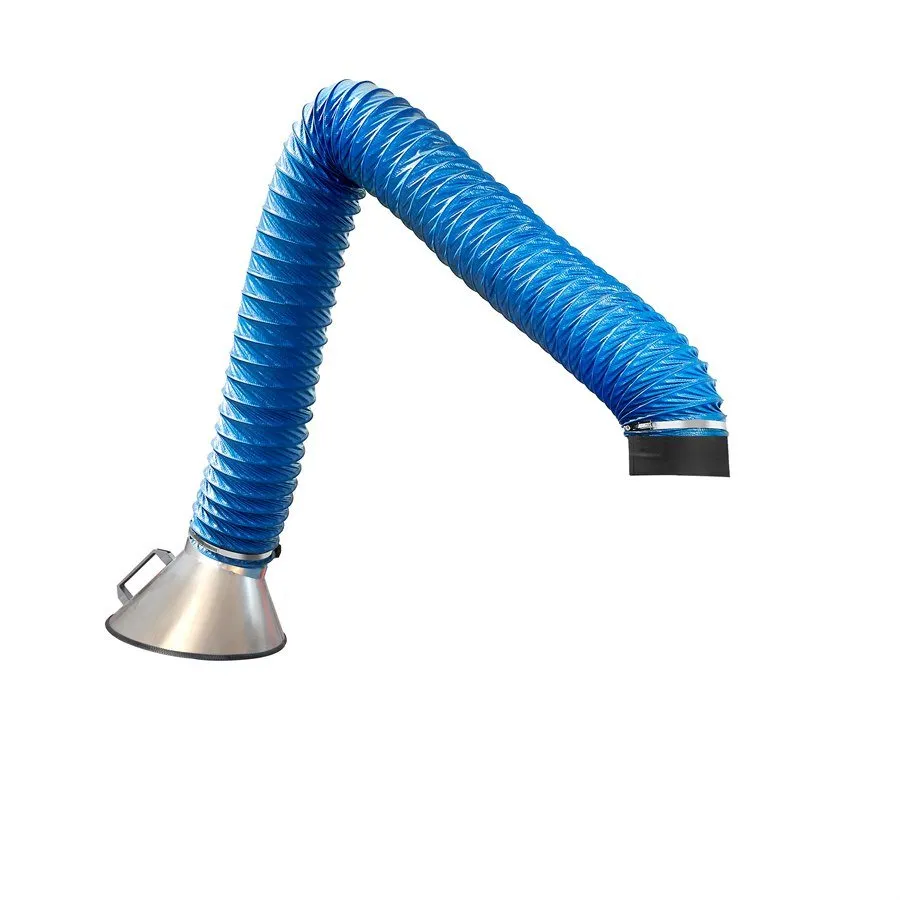
The pipe-type catcher we supply is a baffled chamber at the collector inlet. The airstream is forced around a series of deflectors: heavy particles and sparks cannot follow the bend, hit the metal, give up their heat and drop into a removable trap. There is no filter media in the device and nothing to replace — it is a piece of sheet metal doing a mechanical job.
Where it matters most
- Laser and plasma cutting. The cut throws a fine, very hot spray continuously, not just at start-up.
- Robotic welding cells. The arc runs for hours at a time and the torch is close to the hood.
- Grinding and deburring. Grinding sparks are larger and travel further along the duct than most people expect.
- Retro-fit systems. Older duct runs were often designed without any pre-separation at all; a catcher can be bolted on at the inlet without touching the collector.
Practical notes
Flame-retardant media helps, but it is not a substitute: continuous spark loading still erodes the surface and can eventually open a path through the filter. Size the catcher to the duct diameter (ours run from Φ200 to Φ1100 mm), empty the trap on the same schedule as the dust bin, and keep the deflectors clear of build-up.
Pair one with a pre-separator and the filter only ever sees cool, fine dust — which is the state every cartridge was designed for.